
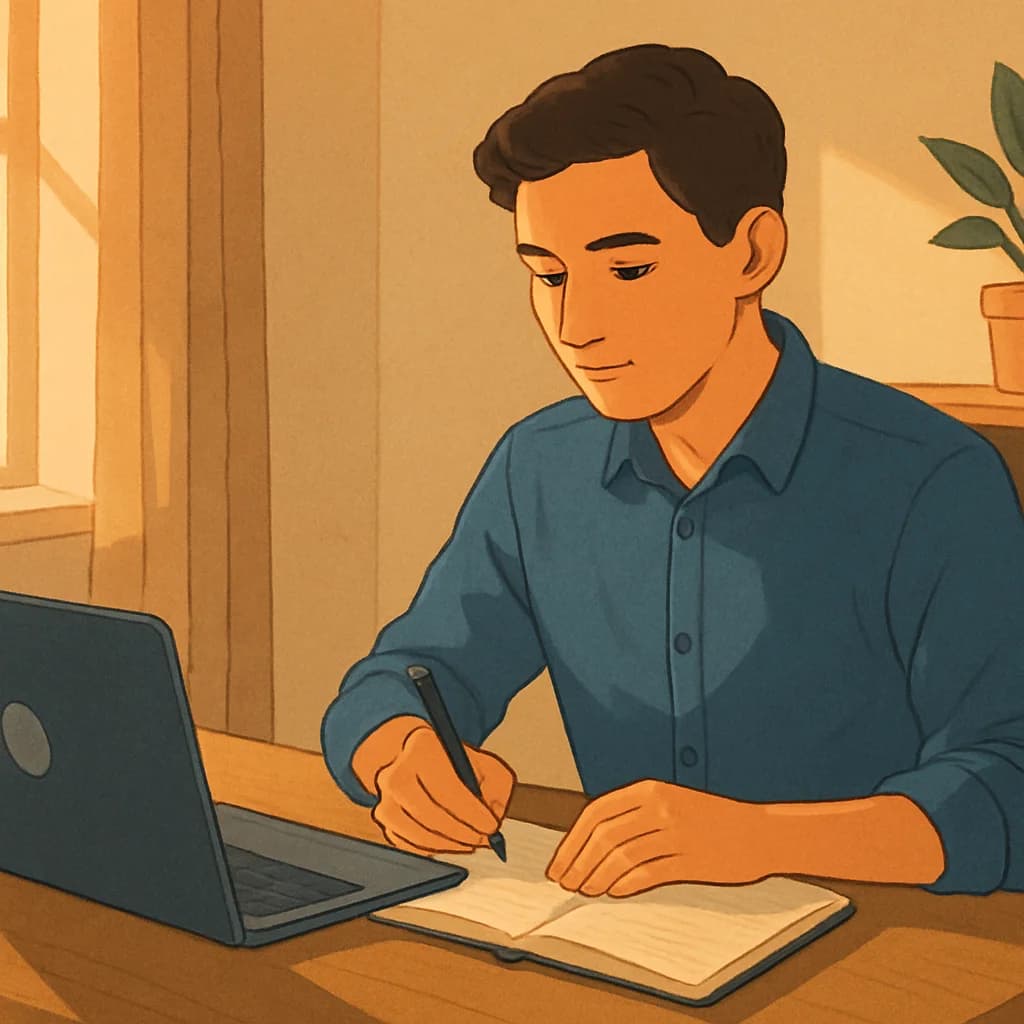
The screen goes quiet. No goodbye, no handshake, no small talk on the way out. Just you, a blinking cursor, and a strange kind of silence.
If you just finished an AI interview, you probably feel like the outcome is already locked in. Like closing that browser tab was the final stamp on your application.
It wasn't. What you do after an AI interview in the next 48 hours still plays a real part in what happens next. And most candidates? They skip every single step below.
Why the 48 Hours After an AI Interview Actually Count
Here's the myth: the AI scores you, the number enters a system, and your fate is sealed the second you click "submit."
The reality is different. Roughly 67% of hiring decisions involve a human reviewing AI-generated transcripts or scores, usually within 48 hours. Recruiters layer their own judgment on top of automated screening results almost every time.
So the gap between your AI session and that human review is still live. Your follow-up email, how you show up on LinkedIn if they check, whether you're ready for a possible second round. All of it still matters.
Silence after submission does not mean a sealed verdict. Not even close.
Write Down Everything While It's Still in Your Head
Do this within 20 to 30 minutes. Before lunch, before scrolling, before you text a friend "I think it went okay?"
Memory research shows that recall of stressful events drops by roughly 40% within the first hour. The answers that felt sharp fifteen minutes ago will be hazy by tonight.
Open a notes app and capture:
- The exact questions (as close to the real wording as you can get)
- What you actually said, even rough bullet points help
- Your sharp moments, the answers that really clicked
- Your stumbles, where you went blank or rushed through
A simple format works great: Question / My Answer / Would I change anything? / Follow-up to research.
We've seen candidates do this across several interviews and suddenly spot patterns they'd never catch otherwise. Maybe you consistently undersell your technical skills. Maybe behavioral questions trip you up every single time. That kind of insight only shows up when you write things down.
If any questions surprised you, look them up now. That research becomes your prep for round two.
What AI Interviews Are Actually Scoring (And What That Means for You)
Most AI interview platforms look at verbal clarity, structured thinking, how closely your language maps to the job description, response time, and (if video is involved) non-verbal signals like eye contact and posture.
Here's a stat that might surprise you: structured interviews predict job performance 26% better than freeform conversations, according to the Journal of Applied Psychology. That structured format is exactly what AI enforces. Companies use it because the signal quality is higher. But here's what most people miss: almost nobody debriefs after.
Try this exercise. Pull up the original job posting. Highlight the words they used to describe the ideal candidate. Now compare those words to what you actually said in the interview.
If the posting mentioned "cross-functional collaboration" and you talked about "working with different teams," the meaning is identical. But the keyword match is weaker. This isn't about gaming anything. It's about communicating your real skills in the company's own vocabulary.
Whether to Send a Follow-Up (And How to Do It Without Being Annoying)
"But I literally just talked to a screen. Who do I even follow up with?"
Fair question. The answer: the recruiter who sent you the interview link, or the hiring manager named on the job posting. Your message doesn't go to the algorithm. It reaches the human who will eventually review your results.
Send it within 24 hours. Keep it to three or four sentences. One specific detail about the role that genuinely interests you, and one concrete skill you'd bring. Nothing generic. Nothing that reads like it was copied from a template and blasted to ten companies.
Skip asking "how did I do?" Instead, ask about next-step timelines. It signals confidence without putting anyone in an awkward spot.
How to Handle the Wait After an AI Interview
Real talk: the AI scores your session in minutes. The human side of the process takes a while. Sometimes a long while.
LinkedIn's hiring data puts the average time from first screening to job offer at roughly 24 days. Almost a full month. The wait is real.
I know the drill. You refresh your inbox ten times before noon. You replay your answers on a loop wondering if that one pause sounded weird. Been there.
One rule that actually helps: pick a single time each day to check for updates. Look once, then close the tab. Constant refreshing changes absolutely nothing except your stress level.
And keep applying while you wait. One interview in your pipeline is a gamble. Three is a strategy. Treat each AI interview as practice, not a verdict on your worth.
If two full business weeks pass with no word, a polite check-in is completely reasonable. Nobody will hold that against you.
Turn This Interview Into Your Best Practice Asset
Here's the step almost nobody takes, and it's the one that pays off the most over time.
AI interviews give you something human interviews rarely do: a consistent, repeatable format. The question types follow patterns. The scoring criteria stay structured. Every session is real data you can study.
Go back to your notes from earlier. Build a personal answer bank. Save your strongest responses word for word. Rewrite the weak ones until they feel natural. After a few interviews, you'll have a tested library of answers you can adapt to any role.
Look, nobody gets this right 100% of the time. But candidates who do a structured review after each round report feeling calmer and sharper in later stages. That's the compound effect of treating every interview as training, not just a pass-or-fail test.
Want to practice before your next real round? AI mock interview platforms let you rehearse the exact format in a zero-stakes environment. You hear your own answers back, work on pacing and clarity, and build the kind of confidence that only comes from repetition.
You already did the hard part by showing up. Now use what you learned to make the next one even better.
IntervAI is here whenever you're ready for that next practice session.